Building the Cheese Board: Ratios, Order, and Restraint
A great board is arithmetic and restraint: three to five cheeses, honest ounces, one hour out of the fridge, and the discipline to stop.
By Eleanor Hastings, Founding Editor · August 10, 2026
The cheese board is the most useful construction in entertaining: it asks no oven, forgives early assembly, and converts a pantry into a party. It is also the most overbuilt object in American hosting, nine cheeses, four jams, a drift of crackers, and nothing to drink with half of it. The professional method is closer to carpentry: a plan, a count, and the discipline to stop.
How many cheeses, and how much
Three cheeses for a small board; five is the ceiling past which attention collapses. The working ratios, per person:
Cocktail hour: 1–2 ounces of cheese per person.
Board as the meal: 4–5 ounces per person, with bread and accompaniments counted as a third of the food.
Course before or after dinner: 1.5–2 ounces, one accompaniment, no crackers.
For six guests around a supper board: roughly a half pound each of three cheeses. The arithmetic scales (the caterer's guide carries the crowd version) but the cheese count does not. Ten cheeses for forty people is still ten cheeses too many.
The board map
Choose by family, so the board reads as a range rather than a crowd. The four-family board:
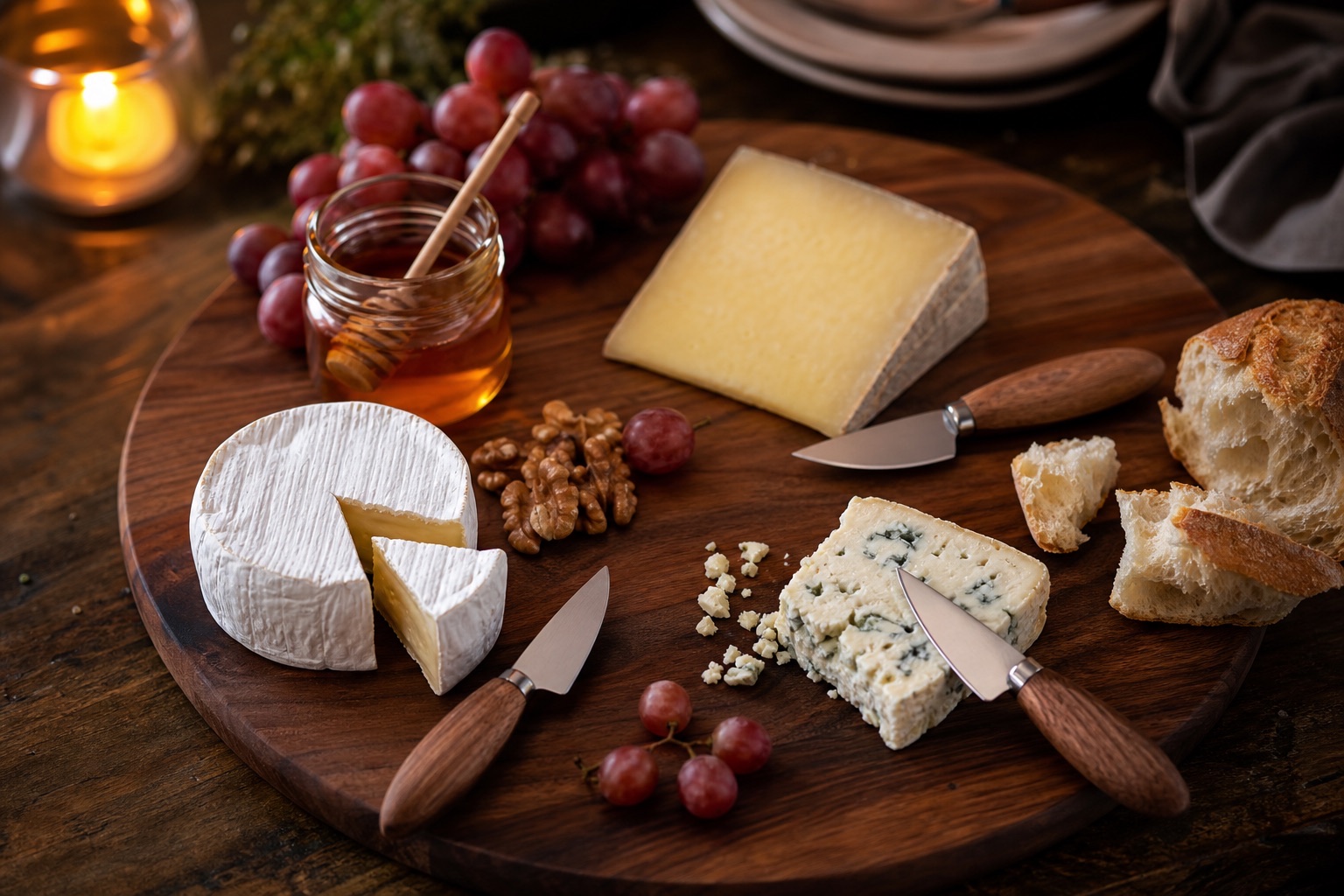
A fresh or bloomy rind: chèvre, camembert. The gentle entry.
An aged hard cheese, clothbound cheddar, gouda, comté-style. The workhorse and usually the first to vanish.
A blue; the punctuation. Smaller portion, always.
An oddity: a washed rind, a smoked cheese, a local pecorino. The conversation starter.
Arrange them with space to cut: nothing crowds like a board that must be dismantled to be enjoyed. Odd numbers, one knife per cheese (two for the blue, which travels its own microbes), labels written on card for boards over four cheeses. And sequence them clockwise mild to strong, the way you would a tasting. Regional depth beats variety while you are learning: one Veneto delicatessen's shelf of formaggi veneti tipici teaches the four families faster than a supermarket's forty labels.
Nine cheeses is not generosity; it is a warehouse. Three to five is a board.
Temperature is half the flavor
Cheese served fridge-cold is a tire; served warm it is a perfume. One full hour out of the fridge, covered loosely against drying; ninety minutes for the dense hard cheeses. This single habit separates boards that get complimented from boards that get photographed and left. Set a timer when guests are confirmed, not when the doorbell rings.
Accompaniments: the restraint list
The board needs contrast, not inventory. The professional short list: one sweet (a varietal honey (the pairings live in our honey guide) or quince paste), one acid (cornichons, mostarda, a bright preserve), one crunch (walnuts, almonds, or the season's pecans), one fruit (fresh grapes or dried apricots), and bread: a torn baguette or a country loaf, sliced no thinner than a finger. Crackers if you must, but bread is the board's true partner. Olives belong, in their own dish with a spoon for pits.
The gift form
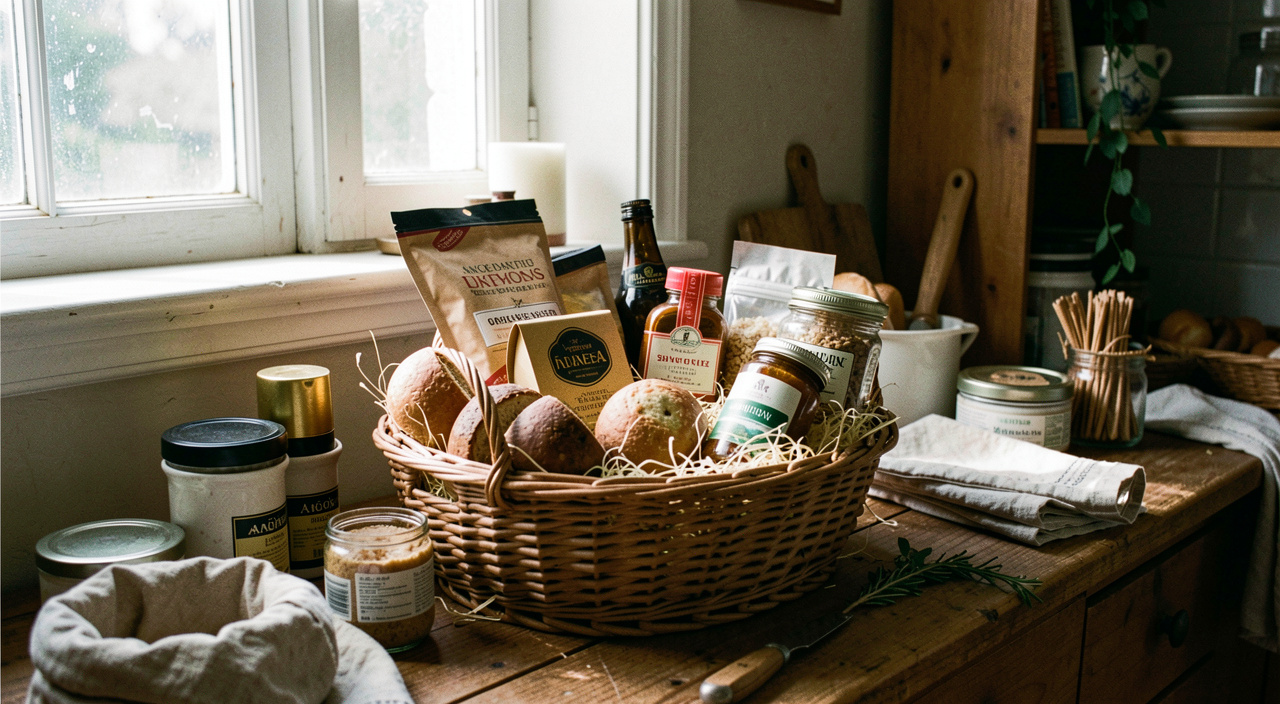
A cheese board is also one of the finest food gifts to give: assembled by you, finished by them. Give it in the wire-fridge register: cheeses that hold (wax-rind, clothbound, a firm blue), the honey, the nuts, the bread wrapped separately, and a card with the one-hour rule and a cutting order mild to strong. It is the first-host gift par excellence (see the housewarming guide) and ships honestly only in cold months, per the seasonal calendar. Wrap the whole thing by the outer course method: cloth, kraft, one ribbon, and a card that names the cheese to cut first.
The last rule is the professional's: the board is finished when the third cheese still stands and the bread is gone. A board wiped clean means you built too little; a board with eight leftovers means you built too much. Aim to be slightly short.
The grazing table scaled: portions, stations, and the refilling rule.
Le fromage appelle un vin qui répond à trois choses : le sel, le gras et l'intensité. Un riesling sec tient souvent ce rôle, mais tout dépend de son acidité, de son alcool et de son extrait. Un blanc vif et droit nettoie le palais entre deux bouchées ; un rouge léger, comme un Schwarzriesling, convient aux pâtes pressées et aux croûtes fleuries. La règle reste simple : plus le fromage est salé et gras, plus le vin doit être tendu. Pour lire l'origine dans le verre et affiner ces accords, le magazine Fass & Feld détaille dégustation, cépages et combinaisons.