The Craft
The Art of the Gift Basket
The four-layer method, anchor, feature, fill, finish, for composed gifts.
Home › The Craft
Food wrapping is engineering with manners: cushion the glass, contain the scent, keep it cold or keep it dry, and finish with a card worth keeping.
Chefs call the last small dish the extra course: the one you didn't order but remember. Wrapping is that course for a food gift: the layer that turns a purchase into a present. It is also engineering. Food is heavy, fragile, sometimes cold, sometimes wet, always aromatic, and it must arrive as an event. The outer course is both halves, the manners and the physics.
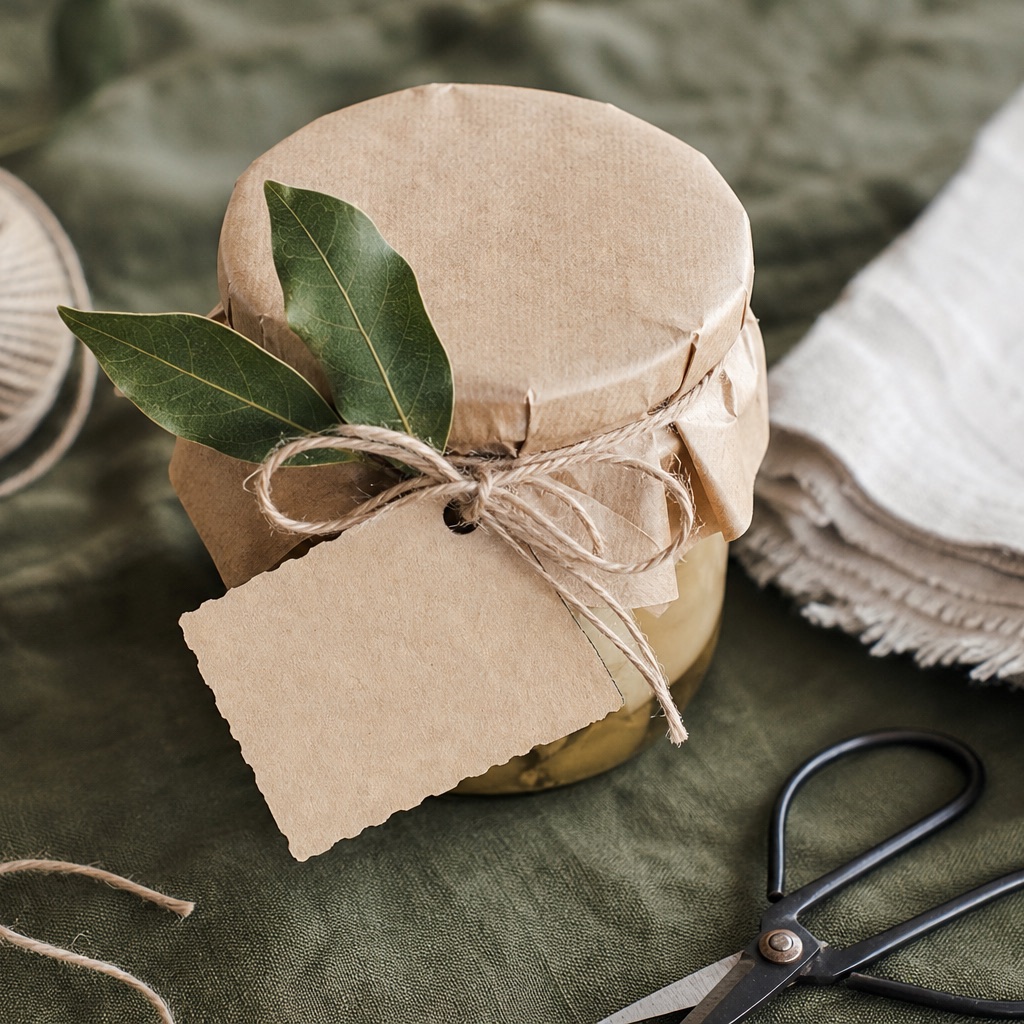
Wraps are not equal; they form a hierarchy of care, and the higher rungs are older than paper:
Beneath the hierarchy sits one prohibition: shrink-wrap and hard cellophane are for warehouses. A gift should open, not require extraction.
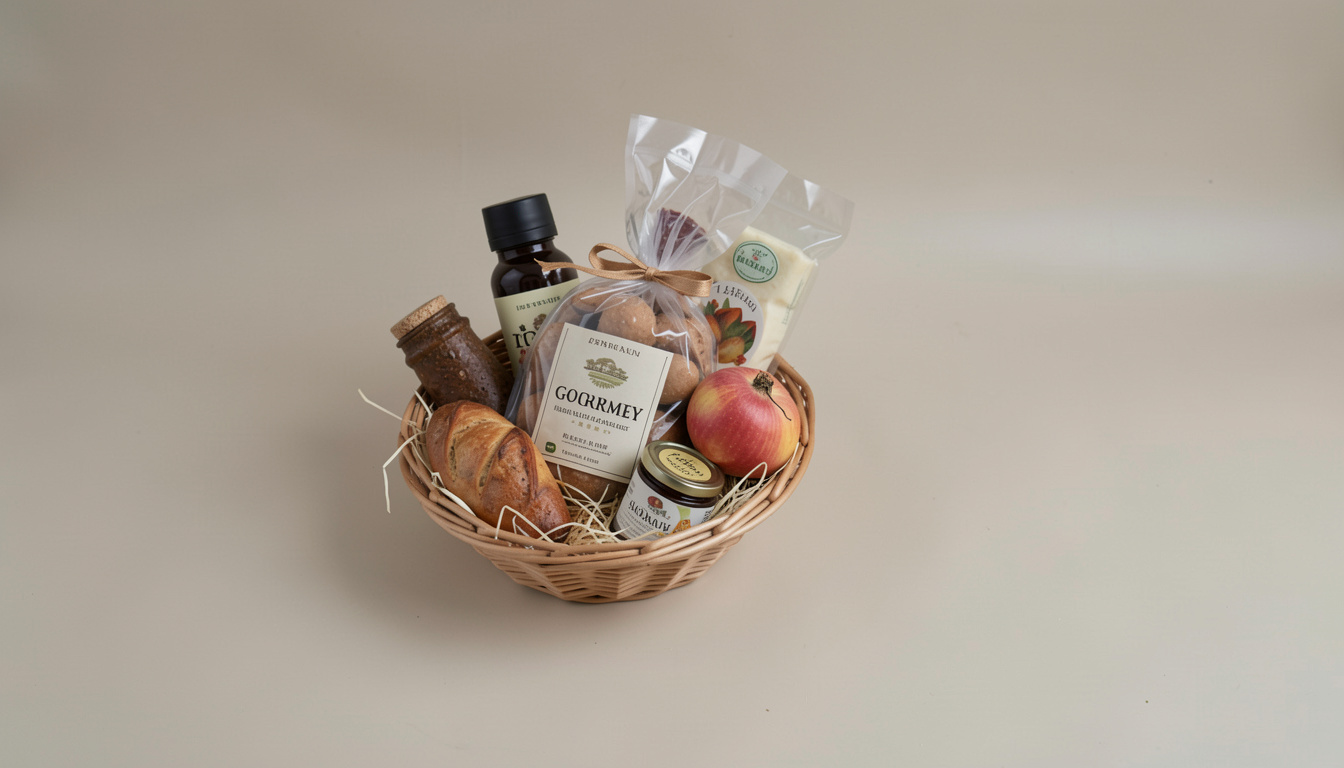
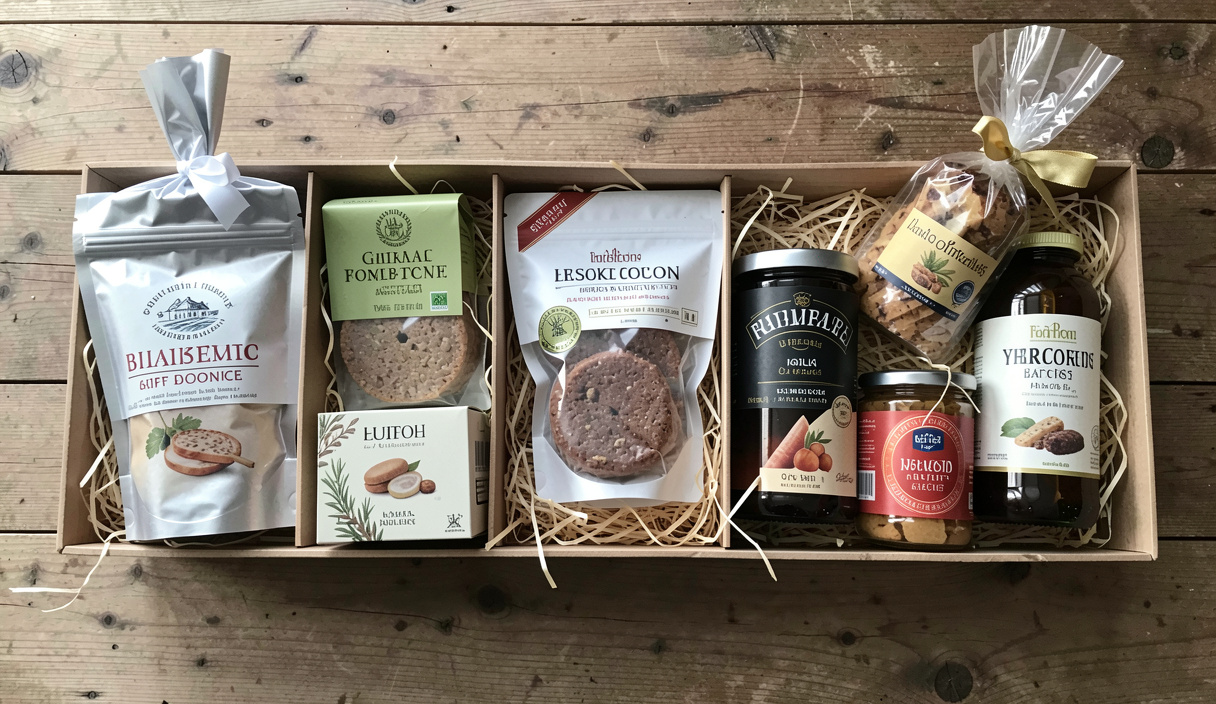
Three laws govern food in transit. Cushion the glass: every jar wrapped individually, doubled paper or cloth, and no glass touching glass; the parcel will be dropped, so build for the drop. Contain the scent: smelly and stinky foods (washed-rind cheese, smoked fish) must be sealed away from absorbent foods (bread, tea, chocolate) or everything arrives as one flavor; separate bags, separate ends of the box. Keep the temperature honest: cold gifts travel with a cold pack and overnight speed in warm months, or wait for the season, the calendar says which foods ship when, and the winter notebook carries December's deadlines.
Jars are the great travelers and the great betrayals. Lid ring taped or tied, wax paper under the lid of anything loose-lidded, and then the tilt test: hold the finished parcel at forty-five degrees for ten seconds, twice, in two directions. Whatever would leak, leaks. Honey and oil survive this; the preserve with the bad seal does not, and the seal check is one of the first things our panel notes at the tasting table, because a gift that ruins a recipient's mail is remembered for the wrong reason.
The card is not packaging; it is the gift's voice. Three lines is plenty: what it is, if it is not obvious; why you chose it for them; when to eat it. "The tupelo, because you put honey in everything. It never crystallizes, so keep it on the counter." Handwritten, always; the handwriting is the signature, and legible-beats-beautiful. Tie the card on with the twine rather than taping it to the paper, so it can be kept when the paper goes. More card-craft in the gratitude guide.
Presentation ends in a gesture, not a surface. Hand the gift, do not set it down and point. Say the one sentence that opens it ("the bread is for tomorrow morning") because a food gift with instructions arrives as a plan rather than a problem. At the door, the wrap comes off in the recipient's hands, and the cloth or tin stays behind: the outer course is served, and it comes back around, the tin returned full next spring is the whole culture working exactly as designed.
The Craft
The four-layer method, anchor, feature, fill, finish, for composed gifts.
Seasons
The month-by-month map of what ships, what waits, and what waits for no one.
The Pantry
The bottle most worth wrapping: labels, harvest dates, the pepper test.