The Craft
Absorption Risotto: Starch, Mantecatura, Safety
How carnaroli and arborio starches behave in an absorption risotto, why mantecatura works, and how to cool and store cooked rice safely at home.
Home › The Pantry
How quality is built along the Italian supply chain, who checks food safety at each step, and which certifications matter for bread and eggs.
Quality in Italian food production is built in stages, not declared at the end. It begins with the field, the feed, and the seed, passes through processing and packaging under inspection, and is finally documented by labels that a buyer can verify. For bread and eggs, the certifications that carry real weight are the ones tied to a defined supply chain, a named control body, and a published specification.
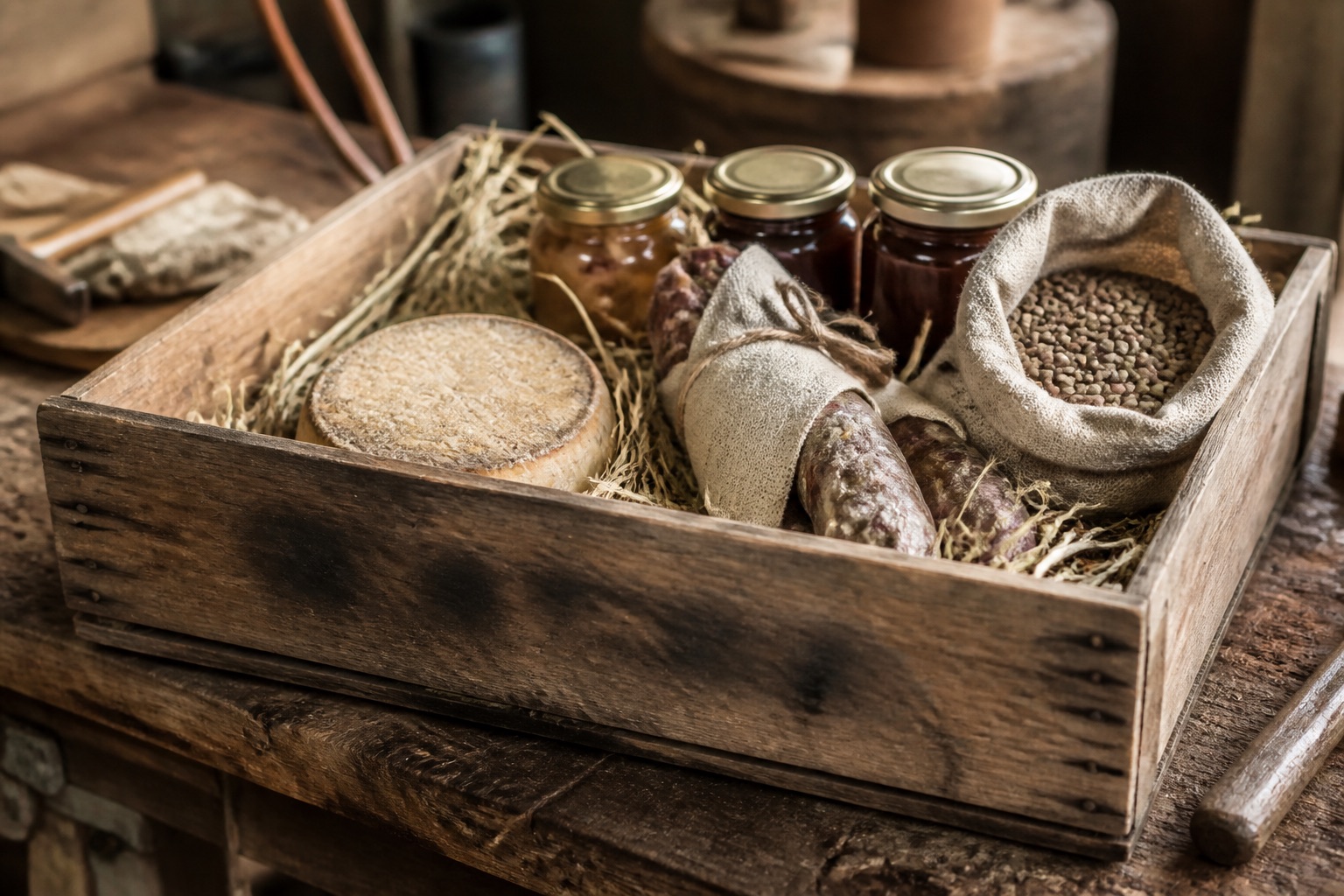
A loaf of bread or a carton of eggs is the last visible step of a long sequence. Each step adds or removes something from the final quality, and each step is a place where a control can be applied.
For bread, the chain runs from seed selection and wheat cultivation through storage, milling, dough making, leavening, baking, cooling, and packaging. Grain variety, soil, harvest timing, and drying conditions shape the flour before a mill ever touches it. Milling then determines extraction rate, ash content, and the behaviour of the dough. A bakery that changes flour supplier without adjusting hydration and fermentation time will produce a different loaf even with the same recipe.
For eggs, the chain runs from the hatchery and the laying hen's feed through housing, collection, grading, packing, cold storage, and distribution. Feed composition affects yolk colour and shell strength. Time between laying and cooling affects internal quality. The date on the carton is the end of a sequence that began weeks earlier.
This is the logic that Italian producers describe when they talk about the chain, quality, field, and product as one continuous subject rather than separate commercial stages. The point is practical: a defect introduced at the field cannot be corrected at the label.
Food safety in Italy is checked by public authorities at defined points, and by operators themselves between those points. The two systems are meant to fit together.
The Ministry of Health sets national policy and coordinates the regional health services. The Carabinieri Command for Agri-Food Protection, known as the NAS, carries out inspections and investigations across production, storage, transport, and retail, including restaurants and markets. Regional and local health authorities, the ASL, inspect food businesses in their territory. The Istituto Superiore di Sanità provides scientific advice and reference laboratory work.
At the European level, the European Food Safety Authority carries out risk assessment, while the Directorate-General for Health and Food Safety manages audits and policy. National laboratories under the Istituto Zooprofilattico Sperimentale network handle testing for animal products, including eggs.
Operators carry the first responsibility. Under European regulation, a food business must apply HACCP principles, keep traceability records one step back and one step forward, and withdraw or recall product if a problem appears. For eggs, this means recording flock, laying date, and dispatch. For bread, it means recording flour lots, additives where used, and baking dates.
Inspection steps are not uniform. A mill may be inspected less often than a high-volume packing plant. A small bakery may see a local health authority visit on a schedule set by risk category. The practical result for a buyer is that safety is documented at several points, not certified once.
Certifications fall into a few families, and only some of them say anything useful about bread or eggs.
For eggs, the most consequential labels are the farming method and the marketing standard. In the European Union, eggs are graded by weight and quality class, and the production method is marked on the shell and the carton: organic, free range, barn, or cage. Organic eggs follow European organic rules, which cover feed, outdoor access, and veterinary treatment. A producer that wants to sell eggs as organic must be certified by an approved control body and inspected at least once a year.
For bread, the picture is more fragmented. Organic certification applies to the flour and to the loaf if all ingredients meet the rules. Protected designation labels, such as PDO and PGI, apply to specific named breads and baked goods with a defined area and method, for example certain regional loaves. These labels are verified by authorised control bodies and require a product specification.
Other marks are weaker signals. A bakery may print "artisanal" or "traditional" without an external check. A sourdough claim may describe a method rather than a certified process. A wholemeal claim is regulated in some markets and loosely used in others. The useful question is always the same: which body verifies the claim, against which written specification, and how often.
For eggs, the date and the farming method are the two pieces of information a buyer can act on immediately. For bread, the flour origin and the leavening method matter more than most front-of-pack graphics.
A buyer does not need to reconstruct the whole chain. A few checks cover most of the ground.
On eggs, look at the code printed on the shell. It begins with a digit for the farming method, followed by the country code and the producer registration number. That code links the egg to a specific farm and housing system. The best-before date, usually 28 days from laying, tells you how much time has passed.
On bread, look for the flour type and the leavening agent. A label that names the wheat variety or the mill is giving you more than one that names only the bakery. If the loaf carries an organic mark, the control body's code should appear near it.
On both, a traceability statement is more useful than a slogan. It does not guarantee quality, but it shows that the producer has a system in place and can answer a question about a specific batch.
Field conditions are variable in ways that processing is not. Weather, pests, and soil change from season to season. A mill can blend wheat to keep flour consistent, but it cannot make a poor harvest into a good one. A laying flock responds to feed and environment over weeks, not days.
This is why certification schemes that begin at the field tend to be more demanding than those that begin at the factory. Organic rules, for example, cover land management and feed production, not only the final product. PDO and PGI specifications often name the area and the method of cultivation or rearing, not only the recipe.
The practical consequence is that the earlier a control is applied, the more it costs and the more it tells you. A test at the packing line catches a problem late. A rule at the field prevents it.
A label is a summary of decisions made earlier. It cannot substitute for the chain that produced it. When a certification is meaningful, it points back to a named control body, a written specification, and a set of inspections at defined steps. When it is decorative, it points to nothing.
For bread and eggs, the certifications that matter are the ones tied to farming method, origin, and organic rules, because those are the stages where quality is hardest to correct later. The rest is packaging.
The Craft
How carnaroli and arborio starches behave in an absorption risotto, why mantecatura works, and how to cool and store cooked rice safely at home.
The Table
A plain guide to the Rauenthal slope in the Rheingau: its six sites, soils and grape varieties, and how to read a German wine label without guesswork.
The Table
What a Marlborough vintage report says about the wine you pour, which recent years ran warm, cool, small or generous, and how long sauvignon blanc keeps.